

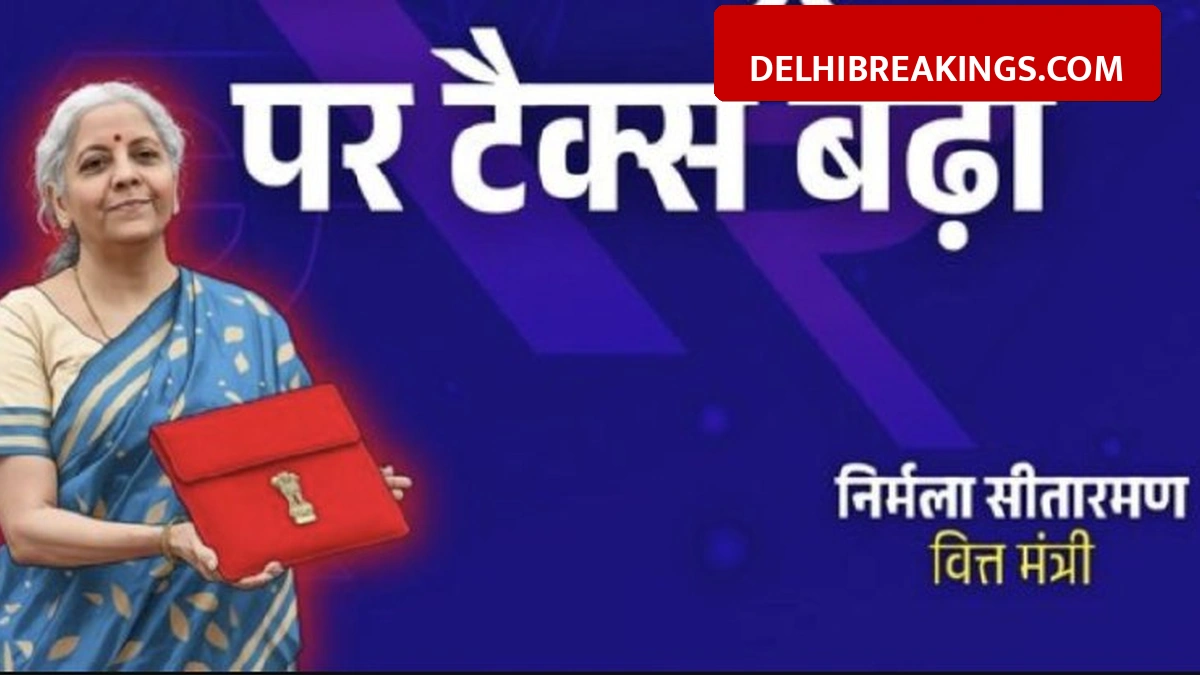
Finance Minister Nirmala Sitharaman presented the Union Budget for 2026-27 on Sunday, marking a historic first for a budget presentation on this day. The stock markets remained open for a special session. The biggest news for traders and investors came in the form of increased taxes on derivative trading. The government has hiked the Securities Transaction Tax (STT) on Futures and Options (F&O), aimed at controlling speculative trading in the market. Following this announcement, both Sensex and Nifty saw a sharp decline.
आपके लिए जरूरी खबर: Budget 2026: No Change in Income Tax Slabs, TCS Reduced on Overseas Tour Packages।
New STT Rates for Futures and Options
The Finance Minister proposed a significant hike in the transaction costs for traders in the F&O segment. The government wants to reduce the risk for small retail investors who often face losses in these high-risk segments. The STT on the sale of options has been increased by 50 percent. This change will make trading more expensive for daily traders.
Here are the revised rates proposed in the budget:
- Options Premium: Tax increased from 0.1% to 0.15%.
- Options Exercise: Tax increased from 0.125% to 0.15%.
- Futures Trading: Tax increased from 0.02% to 0.05%.
- Commodity Futures: Tax increased from 0.02% to 0.05%.
Changes in Share Buyback and Income Tax Rules
Apart from the STT hike, the budget has introduced a major change in how share buybacks are taxed. Until now, companies used to pay tax on buybacks. Under the new proposal, the income earned by shareholders from buybacks will be taxed in their hands as ‘Capital Gains’. This shifts the tax burden directly to the investors receiving the money.
The government also announced that the new ‘Income Tax Act, 2025’ will be implemented starting April 1, 2026. While the personal income tax slabs have not been changed this year, the new act promises to simplify the forms and regulations for the common man. These new tax rules and the STT hike will be effective from the financial year 2026-27.
