

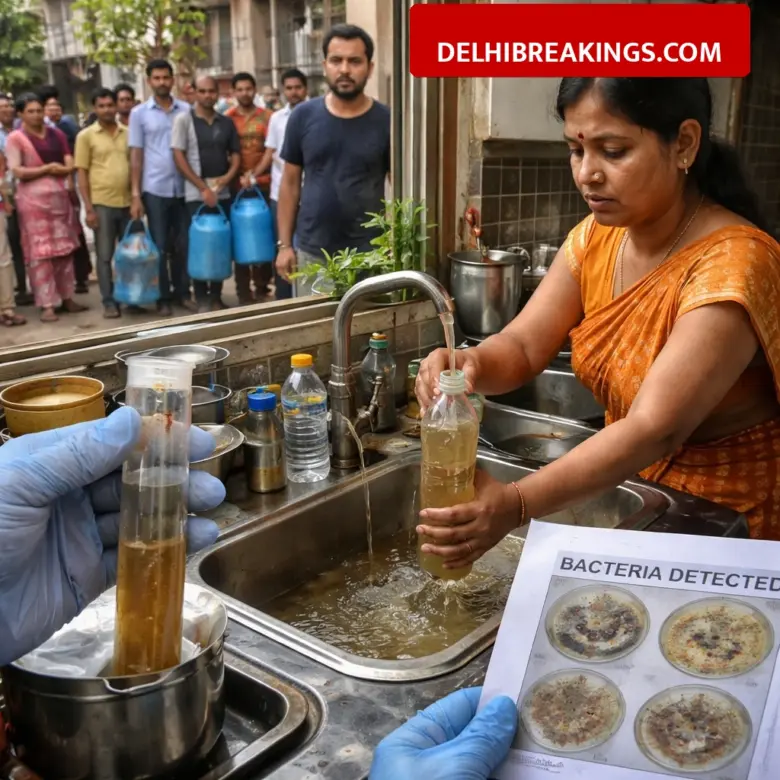
Safdarjung Enclave in South Delhi is currently battling a major public health crisis as drinking water supplied to homes is contaminated with sewage. Approximately 5,000 residents in Blocks B-1, B-2, and B-3 are directly affected by this life-threatening situation. Laboratory tests initiated by the Resident Welfare Association have confirmed the presence of fecal matter and high levels of harmful bacteria in the tap water.
What do the laboratory reports reveal about the water quality?
The water samples collected on February 26 show alarming levels of contamination that exceed all safety parameters set by health authorities. Residents have been complaining about foul-smelling and dirty water for three weeks, and the laboratory results explain the severity of the risk.
| Parameter | Detected Level | Safety Standard |
|---|---|---|
| Coliform Count | 2400 MPN per 100 ml | 0 MPN |
| Turbidity | 1.60 to 11.5 NTU | 1 NTU |
| Ammonia | 1 mg per liter | Safe Limits |
The presence of E. coli indicates that sewage is directly mixing with the drinking water supply. High turbidity levels, especially the 11.5 NTU recorded in Block B-3, make the water physically dirty and dangerous to use for even basic chores. Residents are reporting symptoms like diarrhea and typhoid due to these conditions.
What are the main causes and official actions taken so far?
The primary cause of this crisis is the complete collapse of a 1200 mm diameter main trunk sewer line located near Bhikaji Cama Place. This infrastructure failure, combined with choked local sewer lines, has allowed waste to overflow into the drinking water network through aged and corroded pipes that are over 40 years old.
- Delhi Jal Board has started digging operations to identify specific leak points and cross-contamination areas.
- Water tankers are being deployed to the affected blocks, though residents report the supply is insufficient for the population.
- Water Minister Parvesh Sahib Singh Verma has ordered a 48-hour deadline for resolving such contamination complaints across the city.
- The National Green Tribunal is monitoring the situation following similar reports in Dwarka and Janakpuri.
While the Delhi Jal Board is working on localized repairs, they have not yet issued a formal rebuttal to the high Coliform levels found in the RWA tests. The situation remains critical as the collapse of the main sewer line indicates a need for major rehabilitation work that was scheduled for earlier this year.
