

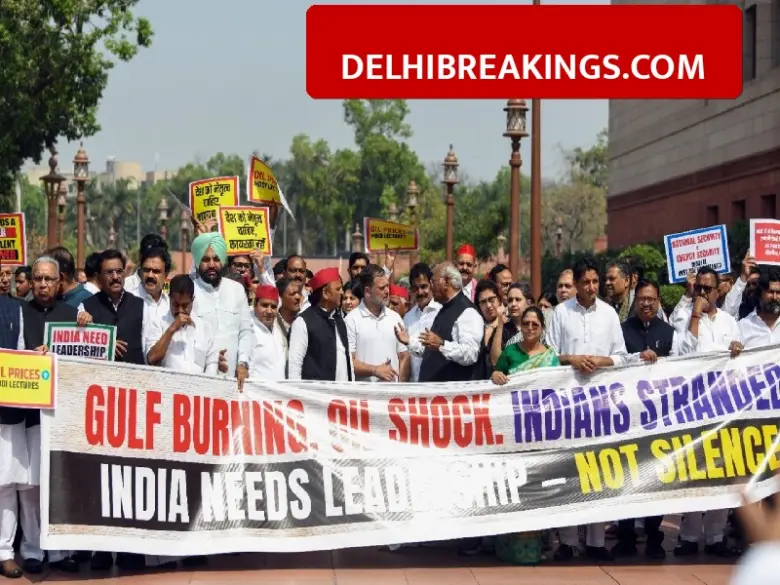
The Lok Sabha witnessed massive disruptions on Monday, March 9, 2026, as the Opposition demanded a detailed debate on the ongoing West Asia crisis. Members from various opposition parties trooped into the well of the House, rejecting a solo ministerial statement and forcing an adjournment until Tuesday morning. External Affairs Minister S Jaishankar assured the Parliament that the government is monitoring the situation and the safety of the Indian community living in the Gulf region remains a top priority.
What caused the disruption in Parliament
The standoff between the government and the Opposition started over the format of the discussion regarding the West Asia conflict. Opposition leaders from the I.N.D.I.A. bloc demanded a short-duration discussion under Rule 193, rather than just hearing a statement from the minister. The presiding officer, Jagdambika Pal, adjourned the proceedings till 11:00 AM the next day due to the continuous uproar.
Speaker Om Birla recused himself from the chair on Monday because a resolution seeking his removal, signed by 118 MPs, was listed on the agenda. The resolution could not be taken up due to the chaos in the House.
The regional conflict escalated after the death of Iran Supreme Leader Ayatollah Seyed Ali Khamenei during joint US-Israeli strikes on February 28, 2026. This development has raised serious concerns in India about energy security and potential oil shocks. Opposition members pointed out the immediate domestic impact, noting a recent increase of 60 rupees for domestic LPG cylinders and 115 rupees for commercial gas rates.
Impact on Indians living in the Gulf
The ongoing crisis directly affects a large number of Indian nationals living and working in the Middle East. S Jaishankar informed the House that there are nearly one crore Indians in the region, and their well-being is the primary focus of the government. The Ministry of External Affairs is actively facilitating the safe relocation of students and business travelers, especially from Tehran.
Data shared in the Parliament revealed that approximately 67,000 Indian nationals have already returned from the conflict zone. India continues to advocate for dialogue and diplomacy to restore peace. On humanitarian grounds, India recently allowed the Iranian vessel IRIS Lavan to dock at Kochi for technical assistance.
The instability in West Asia also puts a significant portion of Indian trade at risk. Annual trade with the Gulf region is valued at nearly 200 billion dollars, and current maritime shipping disruptions pose a major threat to this economic exchange.
