

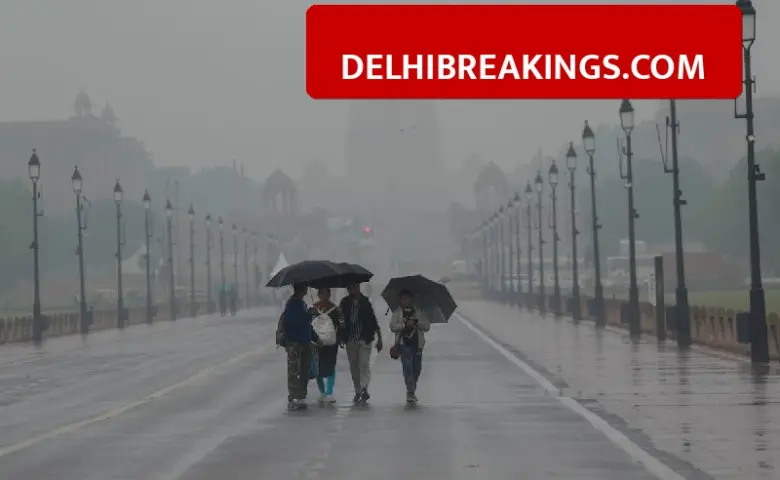
Delhi witnessed an unusual weather pattern on Friday, March 20, 2026, as the city recorded its coldest March day in six years. The maximum temperature at Safdarjung, the primary weather station, was 21.7 degrees Celsius, which is about 10 degrees below the seasonal average. Along with the dip in mercury, residents experienced the cleanest air quality in five months, bringing relief from the usual pollution levels.
Key weather and air quality statistics for Delhi
The combination of rain and strong winds helped in clearing the pollutants and bringing down the temperature significantly. The Central Pollution Control Board (CPCB) recorded an Air Quality Index (AQI) of 93, categorizing it as satisfactory. This is the first time since October 2025 that the city has seen such clean air. The weather details recorded by various stations are as follows:
| Weather Parameter | Recorded Value | Status/Category |
|---|---|---|
| Maximum Temperature | 21.7 Degrees Celsius | 10 Degrees below normal |
| Minimum Temperature | 12.8 Degrees Celsius | 3 Degrees below normal |
| Air Quality Index (AQI) | 93 | Satisfactory |
| Friday Rainfall | 7 mm | Contributed to 16.2 mm monthly total |
What led to this change and what to expect next
According to the India Meteorological Department (IMD), continuous rainfall on Friday was the main reason for this sudden chill. Around 7 mm of rain was recorded, making this month the wettest March in the last few years. Experts at the IMD have noted that while Friday was exceptionally cool, the rain spell is expected to end soon. Chilly winds and fog were observed on Saturday morning, but temperatures are likely to rise gradually from March 21 onwards. The air quality is also predicted to return to the moderate category by early next week as the wind speed stabilizes.
