

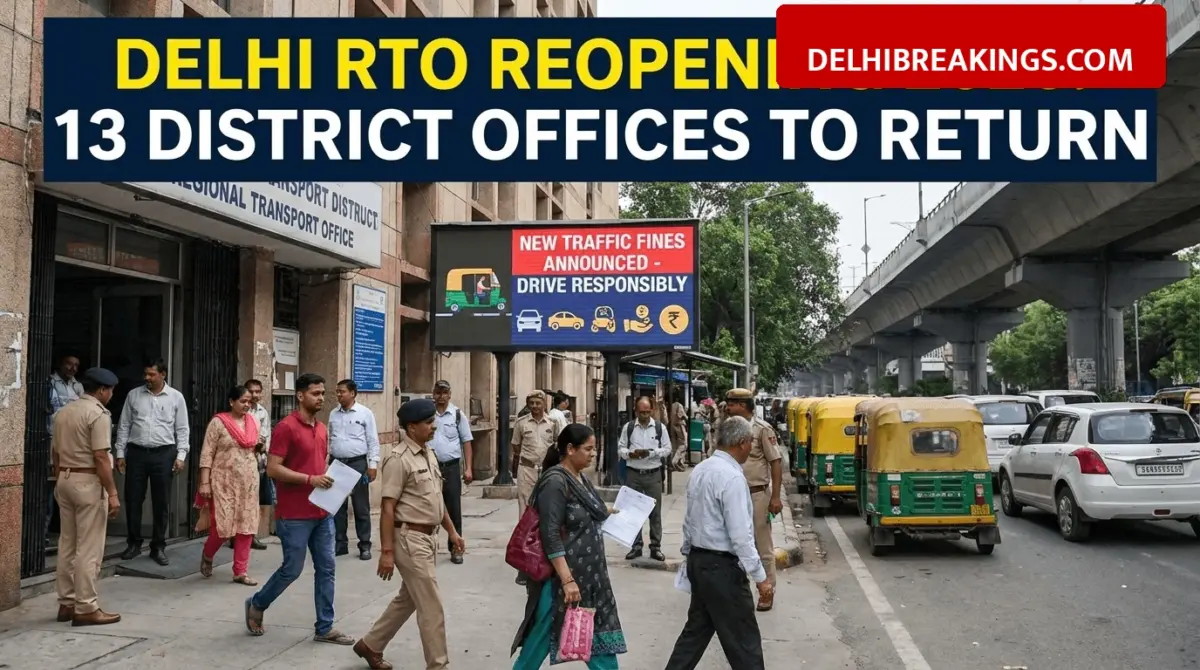
The Delhi Transport Department has announced a major restructuring of its operations by deciding to reopen 13 Regional Transport Offices across the city. This move ensures that each of the 13 revenue districts in Delhi will once again have a dedicated physical RTO to assist residents. The decision aims to decentralize transport services and provide better accessibility for tasks that still require manual intervention or physical verification.
What changes for vehicle owners and the DL-13 series
One of the most significant updates is the reactivation of the DL-13 vehicle registration series. While the DL-13 series makes a comeback, the department has confirmed that the DL-14 series will be eliminated as part of this new district-wise approach. These physical offices will function as support centers to complement the existing faceless digital services which currently handle the majority of transport-related applications.
The government is also providing an option for eligible employees in the government and private sectors to convert their existing DL number plates to the BH or Bharat Series. This allows for road tax payments in smaller periodic blocks instead of a one-time lifetime payment. The restructuring balances the convenience of online services with the necessity of having physical locations for complex local issues.
Strict pollution rules and updated traffic fines for 2026
Chief Minister Rekha Gupta has introduced the Air Pollution Mitigation Action Plan 2026 which brings strict enforcement measures. From November 1, 2026, only goods vehicles that meet BS-VI norms or run on CNG and electricity can enter Delhi. Additionally, any diesel vehicles older than 10 years or petrol vehicles older than 15 years found in public places will be impounded and scrapped without any prior notice.
| Violation Type | Fine Amount in 2026 |
|---|---|
| Driving without a valid PUC Certificate | ₹10,000 |
| Drunk Driving (First Offense) | ₹10,000 and Jail Time |
| Using Mobile while Driving | ₹5,000 to ₹10,000 |
| Not wearing a Helmet (Rider/Pillion) | ₹1,000 |
| Driving without a License | ₹5,000 |
To support the transition to cleaner energy, the new EV Policy 2026 offers incentives of up to ₹30,000 for electric two-wheelers and ₹50,000 for electric autos. Electric cars priced up to ₹30 lakh will also benefit from a 100 percent exemption on road tax and registration fees until March 2030. Enforcement will be aided by AI-enabled cameras and ANPR technology to track pollution certificates and traffic violations accurately.
