

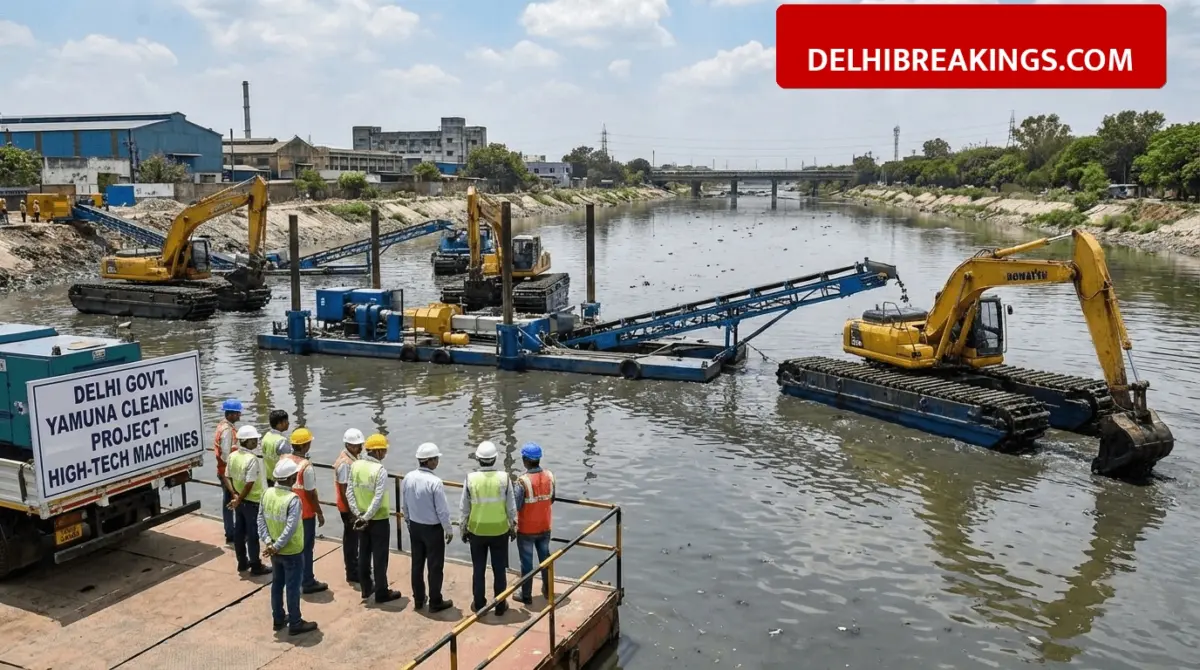
The Delhi government has officially deployed two advanced dual-purpose weed harvester-cum-trash skimmer machines at the Najafgarh drain. These machines were procured at a cost of Rs 2.9 crore and are now working near the Punjabi Bagh bridge. This move is part of a high-tech approach to clean the Yamuna river by targeting the pollution entering through major drains. Irrigation and Flood Control Minister Parvesh Sahib Singh inaugurated these machines, which are designed to remove water hyacinth and floating trash while also desilting the drain bed.
🗞️: Delhi LPG Supply Update: CM Rekha Gupta Assures No Shortage, Control Room Set Up for Complaints।
How will these new high-tech machines work?
The newly deployed machines are Made in India and built with marine-grade steel to ensure they last in different water conditions. They use an advanced conveyor system that allows for continuous cleaning and faster unloading of waste. Unlike older models, these can handle shallow stretches and perform multiple tasks at once. The main goal is to improve the river’s surface quality and ensure that the water flows without any blockage caused by solid waste or silt.
The Four-Pronged Strategy for Yamuna Clean-Up
The government is following a specific plan directed by Lieutenant Governor V K Saxena to clean the river by 2027. This strategy involves coordinated efforts from multiple agencies like the MCD, DJB, and the DDA. The details of the plan include:
| Action Point | Description |
|---|---|
| Solid Waste Removal | Removing silt and trash from the riverbed and major drains. |
| Drain Cleaning | Simultaneous cleaning of Najafgarh and Supplementary drains. |
| STP Monitoring | Daily check on the capacity and output of existing treatment plants. |
| New Infrastructure | Time-bound construction of new STPs to treat 400 MGD of sewage. |
What are the benefits for Delhi residents?
Common citizens will see several improvements as these machines continue their work. Efficient cleaning of the Najafgarh drain is expected to reduce foul smells and mosquito breeding in nearby residential areas. Additionally, the desilting process will help the drainage system handle heavy rains more effectively, which should lead to less waterlogging during the monsoon season. Officials believe that by tackling pollution at the source in these large drains, the overall health of the Yamuna will improve significantly over the next three years.
