

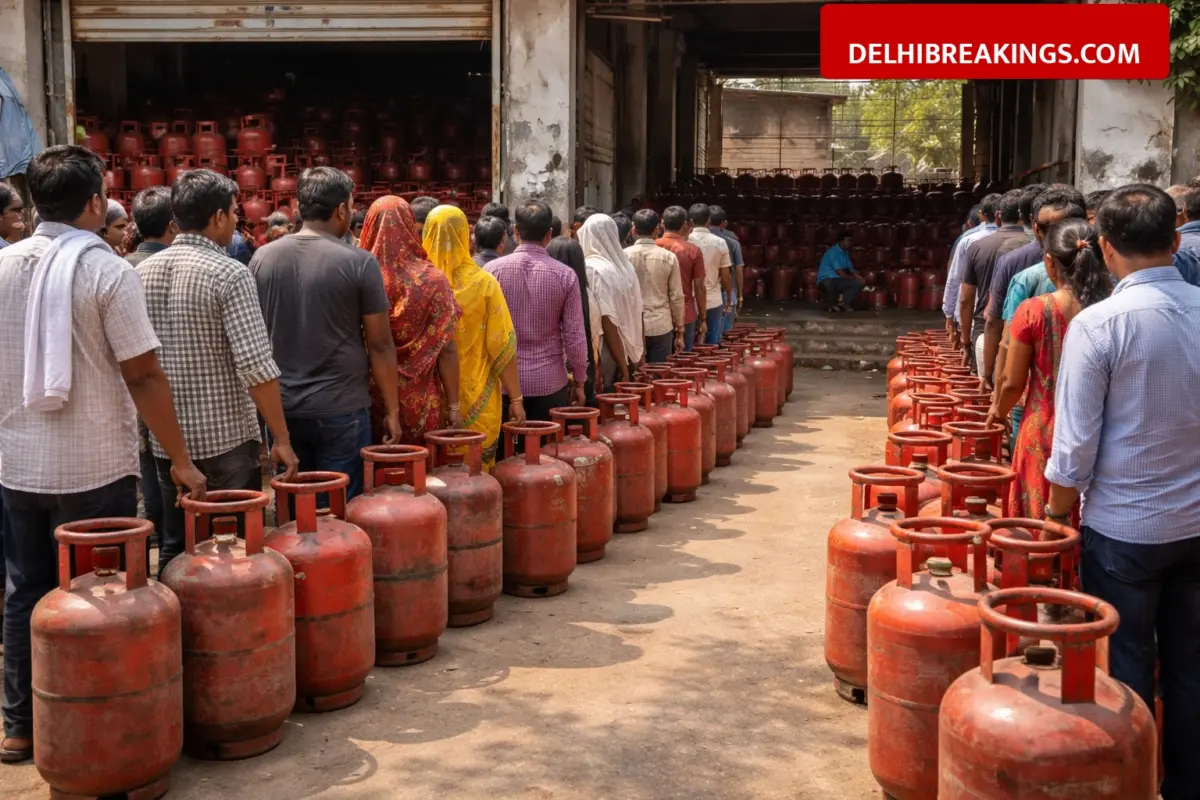
Bihar is currently facing a severe shortage of LPG cylinders, causing significant distress to households and local businesses. As of March 11, 2026, home delivery services have been suspended in various parts of Muzaffarpur and other districts because of a major supply backlog. Consumers are reporting that gas godowns are running empty, forcing many to return home without a refill despite waiting in long queues for hours.
🗞️: Delhi Airport Flight Update: International Passengers Advised to Check Status Amid West Asia Crisis।
New LPG Prices and Booking Rules in Bihar
The Ministry of Petroleum and Natural Gas (MoPNG) has introduced new measures to manage the current shortage and prevent hoarding. The mandatory interval between two domestic cylinder bookings has been increased to 25 days. Prices have also seen a sharp jump following the recent revision on March 7.
| Cylinder Type | Revised Price (Approx) | Price Increase |
|---|---|---|
| Domestic (14.2 kg) | ₹1,011 | ₹60 |
| Commercial (19 kg) | ₹2,120 | ₹115 |
| Black Market Rate | ₹1,500 | Varies |
Under the Essential Commodities Act, the government has directed oil marketing companies like IOCL, BPCL, and HPCL to prioritize domestic household supply over industrial sectors. This move aims to ensure that kitchens continue to function while the supply chain stabilizes.
Why is there a Gas Shortage in Bihar?
The current crisis is linked to international factors and local distribution issues. Geopolitical tensions in West Asia have disrupted shipping routes through the Strait of Hormuz, which is the primary path for India’s LPG imports. This has led to a situation where local bottling plants are operating at limited capacity.
- Gas agencies in Muzaffarpur are receiving only 75% of their usual stock.
- Local distributors claim that bottling plants are prioritizing direct refills over dealer inventory.
- Natural gas is being rationed to ensure Piped Natural Gas (PNG) and CNG for transport remain available.
- The government has confirmed that while national reserves are sufficient for 30 to 40 days, local distribution networks are under pressure.
Local authorities and gas agency owners have urged the public not to engage in panic booking. They state that the situation is being monitored and supply routes are being adjusted to normalize the availability of cylinders as soon as possible.
