

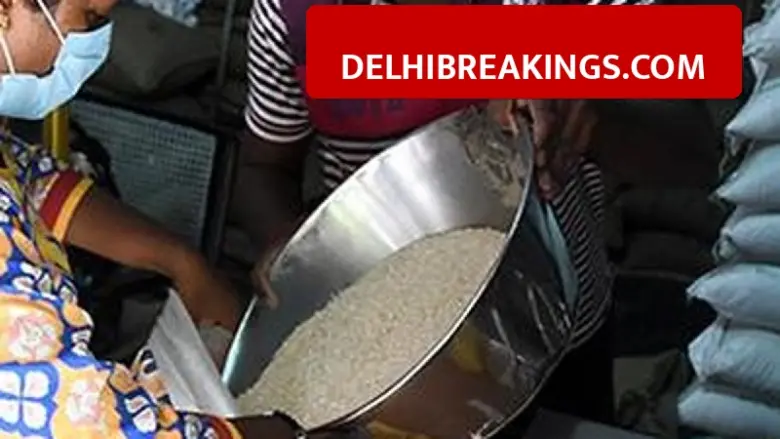
More than 64 lakh people in Delhi are currently receiving subsidized food grains under the Public Distribution System (PDS). The government has officially extended the provision of free rations until December 2028, ensuring long-term food security for vulnerable families. This extension, which began in early 2024, is aimed at supporting low-income households where monthly supplies often determine if a kitchen can run through the month.
Who is eligible under the new Delhi Food Security Rules 2026?
The Delhi government recently notified the Delhi Food Security Rules, 2026, which brought several changes to eligibility and management. The annual family income cap for a ration card has been increased from ₹1 lakh to ₹1.2 lakh, allowing more families to come under the safety net. For the purpose of the ration card, the eldest woman in the household will now be designated as the head of the family. Clear exclusion criteria are also in place to ensure benefits reach the needy, such as disqualifying income tax payees or those owning property in specific colonies.
Ration Entitlements and Distribution Data
As of April 2026, over 64.93 lakh beneficiaries across 14.28 lakh households are covered in Delhi. The distribution network is supported by the Food Corporation of India (FCI) through six major godowns located at Mayapuri, Okhla, Pusa, Narela, Ghevra, and Shaktinagar. Additionally, the central government has announced a three-month advance distribution of grains for April, May, and June 2026 to ensure uninterrupted supply.
| Category/Detail | Details of Entitlement and Coverage |
|---|---|
| Antyodaya Anna Yojana (AAY) | 28 kg wheat, 7 kg rice, 1 kg sugar per card |
| Priority Household (PHH) | 4 kg wheat, 1 kg rice per unit |
| Beneficiaries Count | 64.93 Lakh individuals |
| Income Limit | Increased to ₹1.2 Lakh annually |
| Free Ration Extension | Until December 2028 |
| Grievance Redressal | Three-tier system (Circle, District, State) |
How are ration card applications and complaints managed?
District-level committees headed by the District Magistrate are responsible for scrutinizing and approving ration card applications. These committees include local MLAs and officials from the Food and Supplies department to maintain transparency. To address public concerns, a three-tier grievance redressal system is operational at the circle, district, and state levels. The system aims to resolve general complaints within set timeframes, while urgent cases are prioritized for resolution within 24 hours to prevent any disruption in food supply.
