

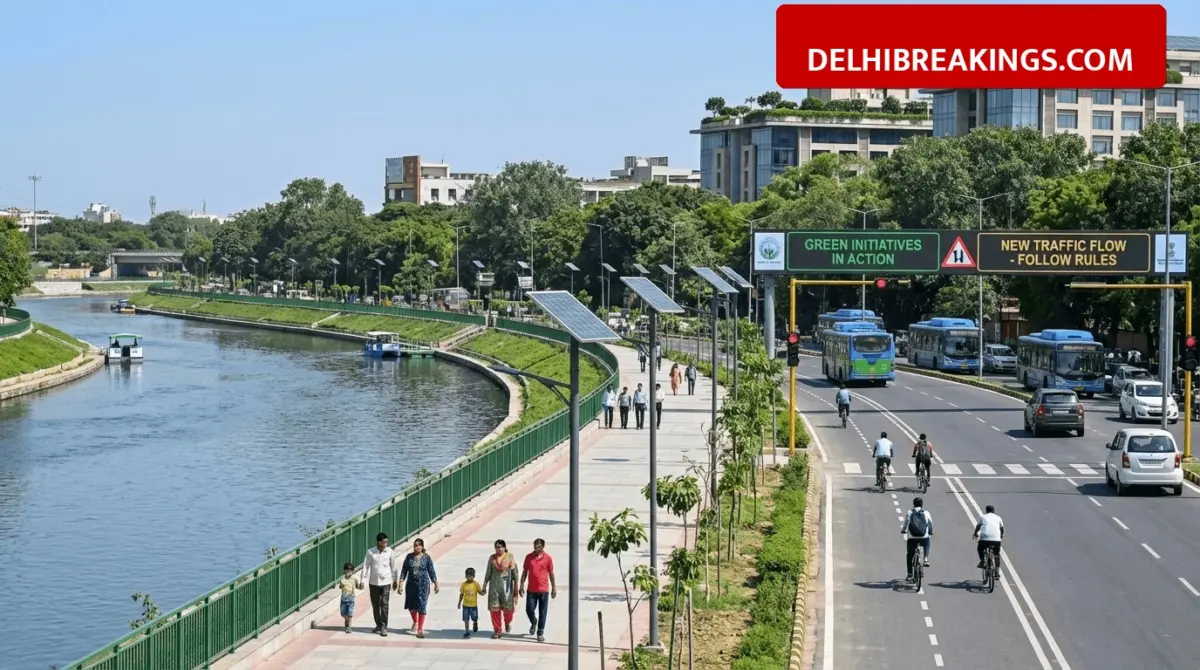
Delhi Chief Minister Rekha Gupta has announced a massive Rs 22,236 crore Green Budget for the 2026-27 financial year to tackle the city’s persistent pollution problems. This allocation represents over 21% of the total state budget and focuses heavily on the Yamuna river clean-up and the Air Pollution Mitigation Action Plan 2026. The government aims to integrate environmental protection into every department’s core policy to ensure a healthier future for residents.
ℹ: Delhi Govt Bans Direct LPG Sale from Godowns, Only Home Delivery Allowed।
Budget Breakdown and Departmental Allocations
The budget distributes funds across multiple departments to address different sources of pollution. The Delhi Jal Board is the biggest beneficiary, receiving funds to expand sewage treatment and clean the Yamuna. Other departments like Transport and PWD have also received significant hikes to improve public transit and manage road dust.
| Department | Allocation (Rs Crore) | Focus Area |
|---|---|---|
| Delhi Jal Board | 6,485 | Yamuna Clean-up & Sewage Treatment |
| Transport Department | 4,758 | Electric Buses & Public Transport |
| PWD | 3,350 | Dust Control & Green Infrastructure |
| Planning Department | 2,350 | Project Streamlining |
| Urban Development/DUSIB | 2,273 | Environmental Interventions |
| Power Department | 1,410 | Solar & Renewable Energy |
| Environment Department | 822 | General Pollution Monitoring |
Strict Rules for Pollution Control and Transport
The Delhi government is introducing several strict measures to control vehicular and construction emissions. The No PUC, No Fuel rule will be strictly monitored through ANPR cameras and digital tracking. Additionally, from November 1, 2026, only goods vehicles that meet BS-VI, CNG, or EV standards will be allowed to enter Delhi. The government also plans to expand the city’s green cover by planting 3.5 million native trees over the next four years.
- Electric Vehicles: Rs 200 crore is set aside for the Electric Vehicle Policy 2.0 to improve charging infrastructure.
- Road Safety: 12,000 electric buses are planned to be on the roads by 2029.
- Dust Management: Mechanical sweepers and misting systems will be deployed at 62 pollution hotspots.
- Waste Processing: Capacity will increase from 7,000 to 15,000 metric tonnes using new waste-to-energy plants.
- Monitoring: The DPCC will receive funds to revamp its air quality tracking war-room and mobile application.
