

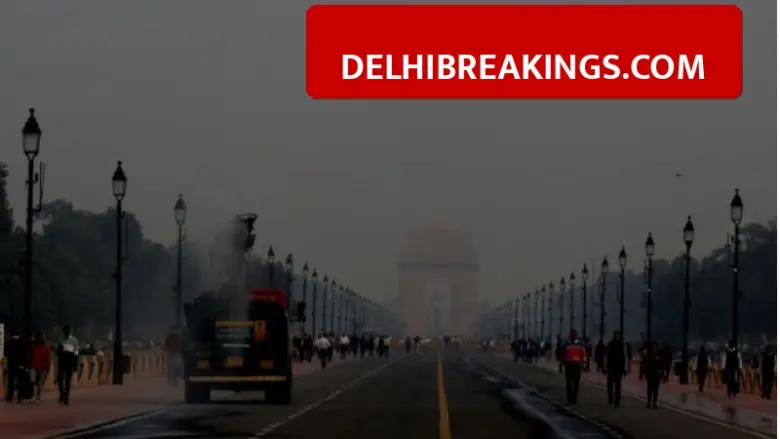
The Delhi government has formally partnered with the Indian Institute of Technology (IIT) Madras to launch a six-month pilot study on smog-eating photocatalytic coatings. This collaboration aims to find a scientific and passive solution to combat the high levels of air pollution in the capital. A Memorandum of Understanding (MoU) was signed on March 13, 2026, marking the start of this technical evaluation project funded by the city government.
How the Smog-Eating Technology Works
The study is led by Professor Somnath C Roy from the Department of Physics at IIT Madras. The process begins in a specialized smog chamber at the institute, where Delhi’s specific air conditions are simulated using real-time data. This technology works by applying photocatalytic coatings to urban surfaces like roads, pavements, and buildings to break down pollutants. This method serves as a continuous background process for air purification rather than a temporary fix.
- Laboratory testing in a controlled environment to simulate Delhi air
- Field trials in specific Delhi locations after lab validation
- Testing various application methods like mixing materials into concrete and asphalt
- Evaluating the reduction of Nitrogen Dioxide (NO2) and Volatile Organic Compounds (VOCs)
- Installing experimental panels on rooftops and streetlights
Key Details of the Government Project
Environment Minister Manjinder Singh Sirsa mentioned that the government wants to find long-lasting and affordable ways to improve air quality. If the six-month study proves these coatings are effective and cost-efficient, the Environment Department plans to submit a proposal for citywide deployment in priority areas. This initiative is part of a larger strategy to support urban growth while using evidence-based findings to protect public health.
| Project Feature | Details |
|---|---|
| MoU Signing Date | March 13, 2026 |
| Study Duration | 6 Months |
| Lead Institution | IIT-Madras |
| Key Officials | Environment Minister Manjinder Singh Sirsa and CM Rekha Gupta |
| Primary Goal | Passive reduction of air pollutants NO2 and VOCs |
| Funding Source | Delhi Government |
