

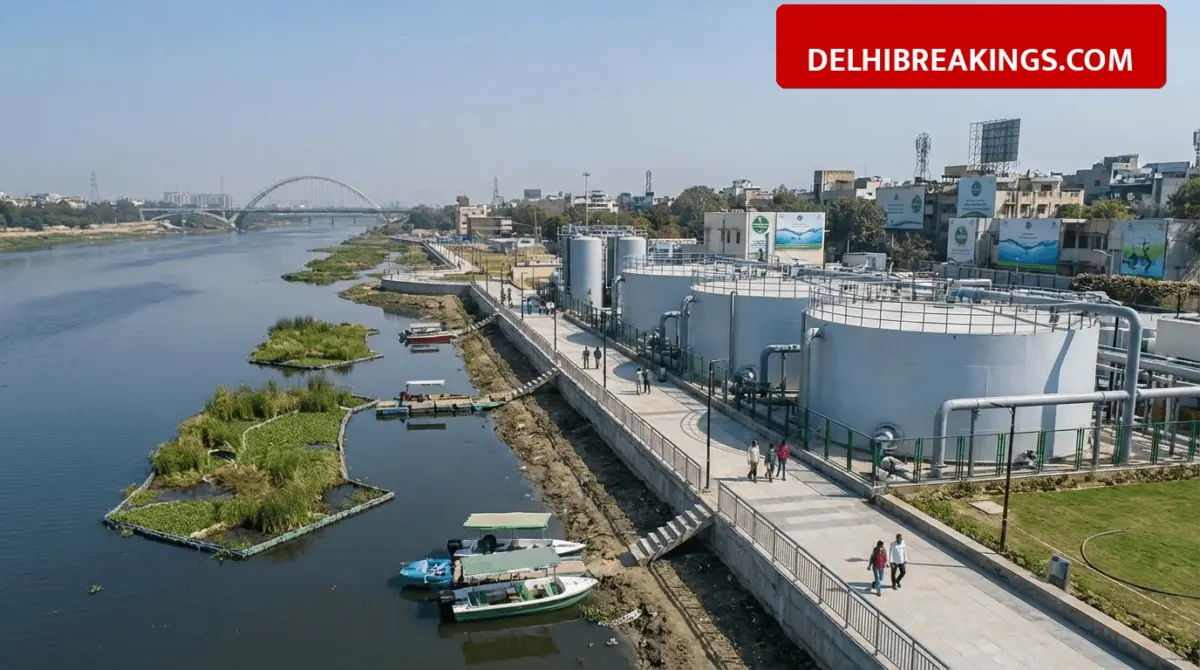
The Delhi government has introduced its first-ever dedicated green budget for the 2026-27 fiscal year, putting a massive focus on restoring the Yamuna river. Chief Minister Rekha Gupta presented the budget on March 24, 2026, which earmarks a total of Rs 22,236 crore for environmental initiatives. This green spend makes up about 21.4% of the city’s total Rs 1.03 lakh crore budget, reflecting a major shift towards sustainable urban development.
How is the green budget being distributed among departments?
The government has divided the funds across multiple sectors to tackle different types of pollution, ranging from toxic river water to road dust and vehicle emissions. The Delhi Jal Board (DJB) receives the largest portion to handle sewage and water treatment infrastructure.
| Department / Purpose | Allocation (Rs Crore) |
|---|---|
| Yamuna Cleanup and Water Infrastructure | 6,485 Crore |
| Water and Sewerage Development | 9,000 Crore |
| EV Buses, Charging, and Dust Control | 4,758 Crore |
| PWD (Green Infrastructure and Dust) | 3,350 Crore |
| Environment and Forest Department | 822 Crore |
| Delhi Electric Vehicle Policy 2.0 | 200 Crore |
| Yamuna and Water Body Rejuvenation | 200 Crore |
| DPCC War-room and Real-time Tracking | 2 Crore |
What are the main goals of this environmental plan?
The green budget is not just about spending money but achieving specific targets to make Delhi a cleaner city. The government plans to monitor 17 key departments to ensure their spending aligns with environmental goals. Below are the key targets set for the coming years:
- Increase sewage treatment capacity from 814 million gallons per day (MGD) to 1,500 MGD.
- Deploy a total of 12,000 electric buses on Delhi roads by the year 2029.
- Plant 35 lakh native trees over the next four years to improve the city’s green lungs.
- Boost waste-processing capacity from 7,000 to 15,000 metric tonnes through new waste-to-energy plants.
- Process 1,500 tonnes of cow dung every day to keep it out of the Yamuna.
- Develop cycle tracks and a flood protection wall along specific stretches of the river.
Chief Minister Rekha Gupta mentioned that the goal is to make Delhi a courtyard of greenery rather than a concrete jungle. The Delhi Jal Board has also called for public support, asking citizens to report sewer leakages and avoid throwing waste into the river to help the cleanup mission succeed.
