

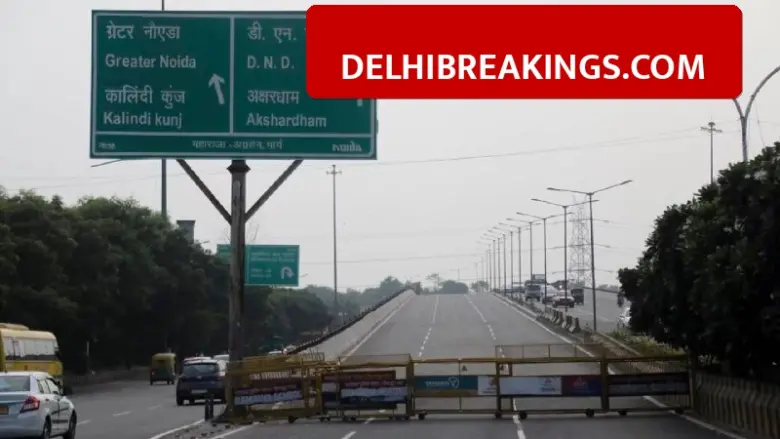
The Public Works Department (PWD) has officially proposed 10 major infrastructure projects aimed at reducing heavy traffic on the city’s busiest corridors. These proposals are expected to be highlighted in the upcoming Delhi Budget for the financial year 2026-27. Most of these projects are currently in the initial stage, and the department has already conducted internal inspections with inputs from the Delhi Traffic Police.
🗞️: DGCA Implements Stricter Alcohol Test Norms for Pilots, License to be Cancelled on Third Violation।
Which areas will get new roads and flyovers?
The new plan focuses on providing smooth connectivity between North, South, and Old Delhi, as well as better links to Gurugram and Noida. One of the key proposals is a 7-km integrated transit corridor on Aurobindo Marg (INA to Mehrauli) to ensure signal-free movement. Another major project involves the redevelopment of Mathura Road from Ashram to Badarpur, which aims to cut travel time from 50 minutes down to just 15 minutes.
Here is a list of some critical projects proposed by the PWD:
- AIIMS to Mahipalpur: A high-budget elevated road estimated at ₹5,000 crore to bypass central Delhi congestion.
- Shiv Murti to Manesar: A 5-km tunnel project costing ₹3,500 crore to ease traffic near the airport zone.
- Punjabi Bagh to Tikri Border: A 17-km stretch planned to be made fully signal-free.
- Kalindi Kunj: A signal-free circular road modeled after the Dhaula Kuan corridor.
- Old Delhi: Specialized upgrades near SP Mukherjee Marg and the railway station.
What is the cost and timeline for completion?
These infrastructure upgrades are part of a larger ₹24,000-crore plan. Officials estimate that the Punjabi Bagh to Tikri Border project will take about 1.5 to 2 years to complete once approved. Additionally, the deadline for the long-stalled Barapullah Phase-3 flyover has been set for May 2026. Experts from the School of Planning and Architecture are consulting with the PWD to ensure these corridors are feasible.
PWD Minister Parvesh Sahib Singh stated that the government is moving away from temporary fixes toward a structured effort to resolve infrastructure gaps. Apart from saving time for commuters, these projects are also expected to help reduce vehicular pollution, which accounts for a significant portion of the city’s emissions.
