

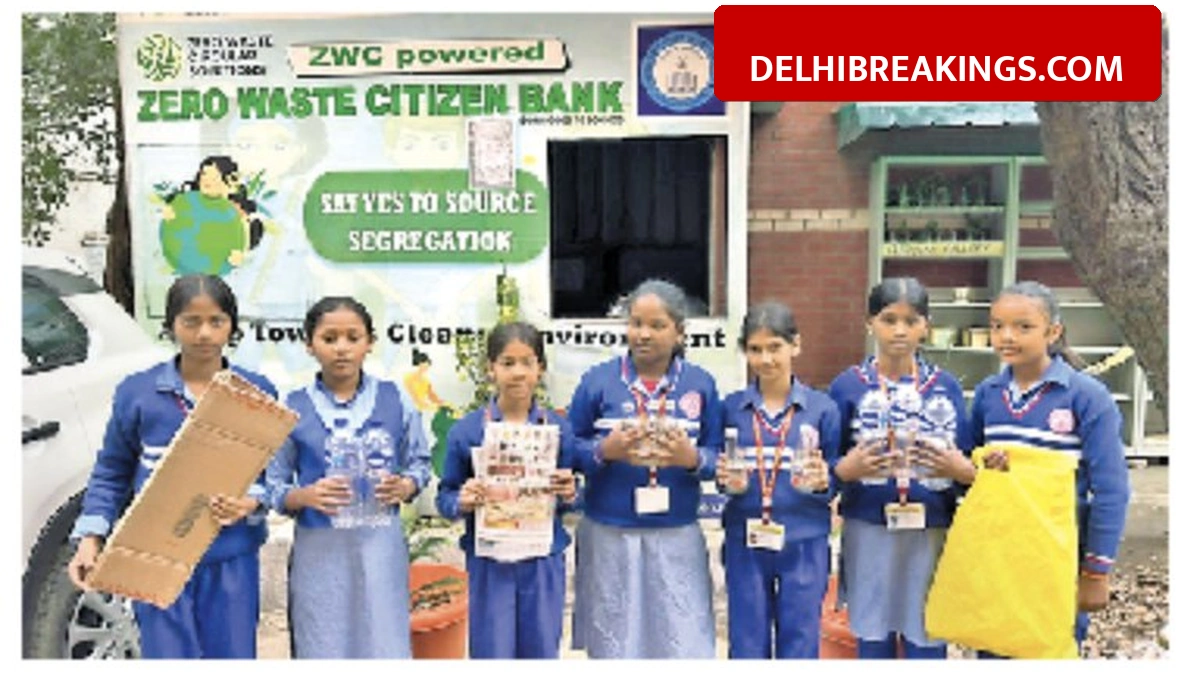
A government school in Delhi has started a unique way to deal with plastic pollution while helping students. Sarvodaya School in Sector-8, Rohini launched a ‘Plastic Waste Bank’ where children can deposit plastic waste from their homes. In return for this waste, the students receive stationery items they need for their studies.
How does this exchange offer work?
The school runs this program in partnership with an organization called Zero Waste Circular (ZWC). Students bring plastic items that would usually be thrown away and deposit them at the school’s bank. They earn reward points for every deposit they make.
These points work like currency within the school bank. Students can use these accumulated points to “buy” pencils, notebooks, and other stationery materials. This method encourages them to collect waste instead of littering. In just the last year, 2,891 students at this school became customers and deposited over 2 tonnes of plastic.
How many schools are part of this now?
The initiative started at the Rohini school but has grown quickly because of its success. Principal Awadhesh Jha stated that the main goal is to make children aware of the campaign against plastic pollution. Following the positive results, similar banks opened in seven other government schools in Rohini.
The program also expanded to a private school in Patparganj and some housing societies in Noida. In total, across all locations, more than 7,900 students are now involved in this campaign. Together, they have collected approximately 4.4 tonnes of plastic waste so far.
Key Numbers from the Campaign:
- Total Students Involved: Over 7,900
- Total Plastic Collected: Approx 4.4 tonnes
- Main Partner: Zero Waste Circular (ZWC)
- Starting Location: Sarvodaya School, Sector-8, Rohini
