

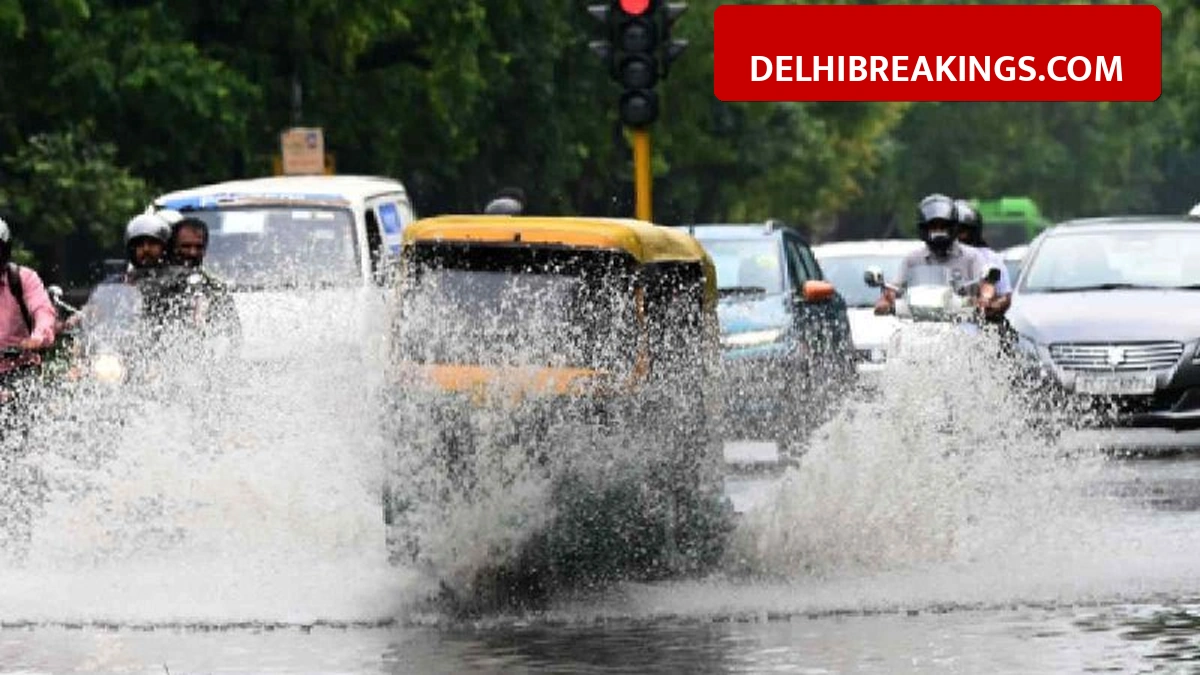
The India Meteorological Department (IMD) has issued a significant weather update for the residents of Delhi-NCR. A fresh Western Disturbance is approaching the region, which is set to change the atmospheric conditions starting this weekend. The department has placed the capital under a Yellow Alert for Saturday and Sunday, warning people about potential disruptions. Residents can expect a mix of rain, thunderstorms, and gusty winds that might impact outdoor plans and daily commutes.
आपके लिए जरूरी खबर: New Solid Waste Management Rules 2026: Waste segregation mandatory in 4 ways from April 1, heavy fines for violators।
When will it rain in Delhi?
The weather is expected to take a turn starting from Friday evening with increased cloudiness. By Saturday, January 31, and Sunday, February 1, the city will witness distinct weather changes. The forecast predicts spells of light to medium rain accompanied by thunderstorms and lightning. During this period, strong gusty winds are likely to blow at speeds of 30 to 40 kmph, especially towards the night. Monday, February 2, may still see some residual light rain in parts of Delhi, Noida, and Gurgaon before the system clears out.
What is the current temperature status?
Before the wet spell begins, the city has been experiencing fluctuating temperatures. On Thursday, the minimum temperature was recorded at 11.0°C, which is slightly higher than the normal range. However, day temperatures have dropped significantly in some pockets. The Palam observatory recorded a specific ‘Cold Day’ condition where the maximum temperature stayed at just 15.3°C, which is nearly 7 degrees below the normal average for this time of the year. Maximum temperatures are expected to dip further after the weekend rain.
Is the pollution level increasing?
Despite the incoming wind and rain, the air quality in Delhi remains a serious concern. While there was a marginal improvement on Thursday, real-time data for Friday shows that pollution levels have spiked again. The Air Quality Index (AQI) has jumped into the ‘Very Poor’ to ‘Hazardous’ category, with some stations recording levels between 310 and 376. The ventilation index remains low, which is preventing pollutants from dispersing effectively, keeping the air quality in a dangerous range for the next few days.
