

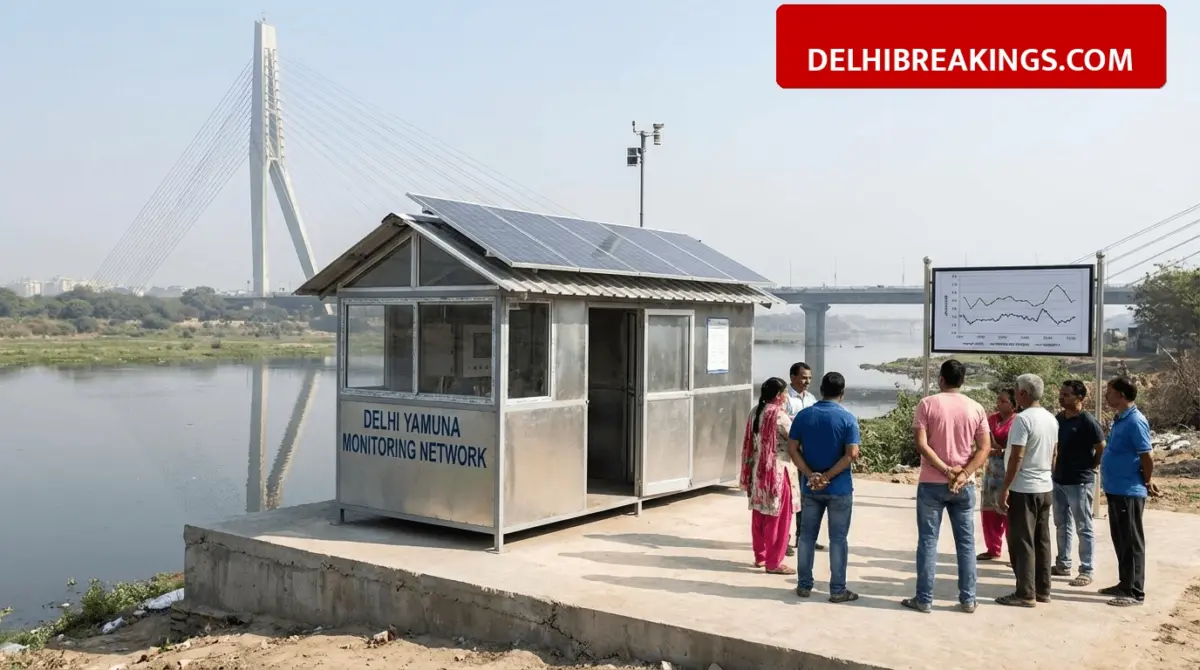
The Delhi government is set to enhance its efforts to clean the Yamuna river by launching a real-time monitoring system from May 2026. A total of 41 online monitoring stations are being installed across six river sites and major drains to track pollution levels accurately. The installation process is expected to be completed by the end of April, following the tender award in March 2026. This initiative aims to bring transparency to the river cleaning process and allow the public to access water quality data.
What will these monitoring stations track?
The new online monitoring stations will observe various scientific parameters to determine the health of the river. These include pH levels, biological oxygen demand, chemical oxygen demand, and total nitrogen. The stations will also measure dissolved oxygen, temperature, and conductivity. While most data will be collected automatically, fecal coliform levels will still be monitored through manual testing. All stations will be powered by solar energy to ensure they remain operational without external power issues. The data will be sent directly to the Delhi Pollution Control Committee for analysis.
Major financial investment and infrastructure plans
The Delhi government has allocated significant funds to ensure the success of the Yamuna rejuvenation project. This includes massive spending on sewage treatment plants and infrastructure upgrades. Along with physical monitoring, the government has launched digital tools like an AI-powered chatbot and the DJB 1916 mobile app for citizen participation and complaint tracking.
| Project Component | Estimated Cost/Allocation |
|---|---|
| Yamuna Cleaning (2025-26 Budget) | ₹500 crore |
| Yamuna Rejuvenation & Infrastructure | ₹1,500 crore |
| Total Allocation (Last Year) | ₹9,000 crore |
| 12 New Sewage Treatment Plants | ₹7,200 crore |
| 35 New Decentralised STPs | ₹2,400 crore |
Water and PWD Minister Parvesh Verma recently unveiled the Summer Action Plan 2026-27, which focuses on better sewer management and protecting the river from untreated waste. Environment Minister Manjinder Singh Sirsa noted that this system will help fix accountability by identifying exactly where pollution enters the river. The project includes a five-year period for operation and maintenance to ensure continuous data transmission.
