

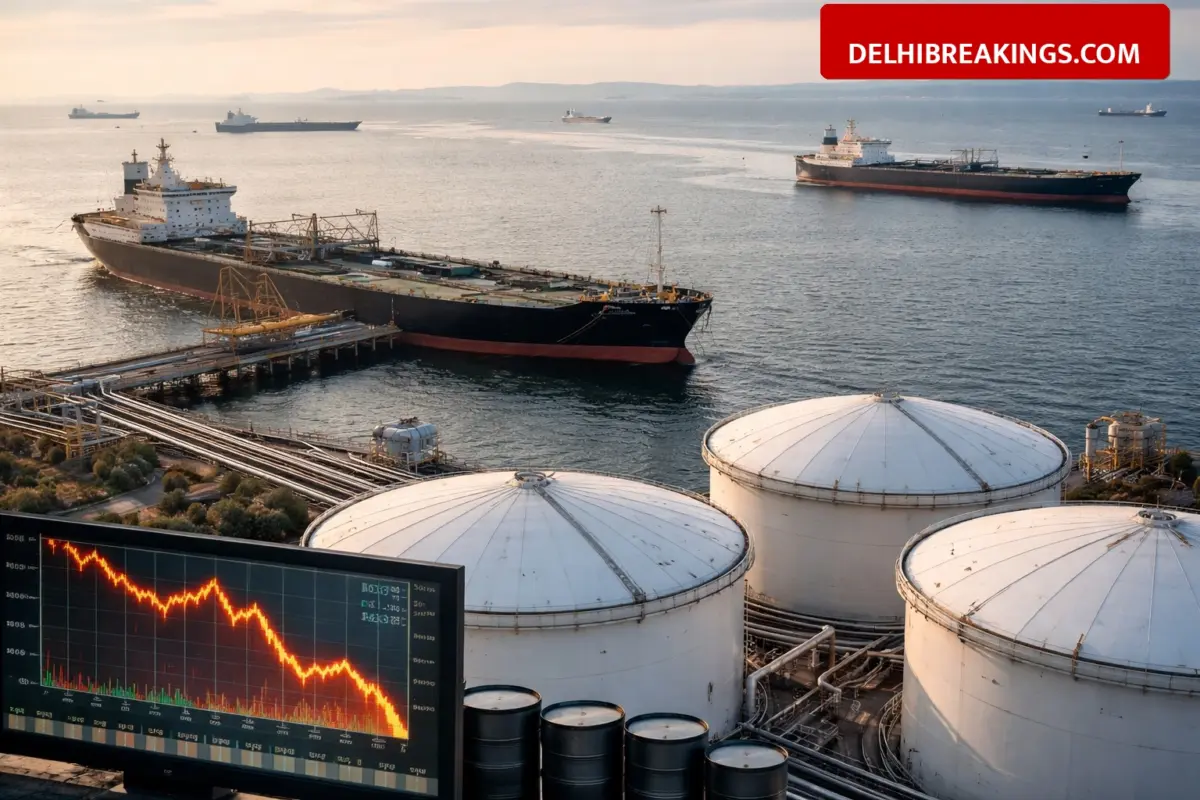
The International Energy Agency has officially agreed to release a record 400 million barrels of oil from global emergency reserves. US President Donald Trump confirmed this major decision during a G7 meeting chaired by French President Emmanuel Macron. This massive coordinated action is the largest in the 50-year history of the IEA. Following the announcement on March 11, global oil markets reacted quickly with Brent crude prices dropping by approximately 15 percent.
What caused the global oil supply disruption
The decision to release emergency oil stocks follows the effective closure of the Strait of Hormuz. The ongoing regional conflict involving the US, Israel, and Iran has blocked roughly 20 percent of the global oil supply. This translates to about 20 million barrels per day being stuck in the region. Due to the lack of safe export routes and full storage facilities, major Gulf producers like Saudi Arabia, UAE, Iraq, and Kuwait have cut their production by a collective 6.7 million barrels per day. IEA Executive Director Fatih Birol stated that the current market challenges are unprecedented in scale.
How the emergency reserves will be used
The 32 member states of the IEA hold around 1.2 billion barrels in public emergency reserves along with 600 million barrels in industry stocks. The emergency oil will enter the market based on the specific situations of each member country. Germany and Austria have already confirmed their immediate participation in the release.
- United States: President Trump plans to tap the US Strategic Petroleum Reserve, which currently holds about 415 million barrels, to bring prices down further.
- Japan: Officials announced that their reserve drawdown will begin on Monday, March 16.
- Market Impact: Brent crude prices fell from nearly $120 to trade between $84 and $90 per barrel within 24 hours of the news.
Despite the massive release of oil reserves, officials clarify that long-term market stability still depends on reopening the Strait of Hormuz. Currently, hundreds of oil tankers remain idle as regular sea transit remains at a near standstill.
