

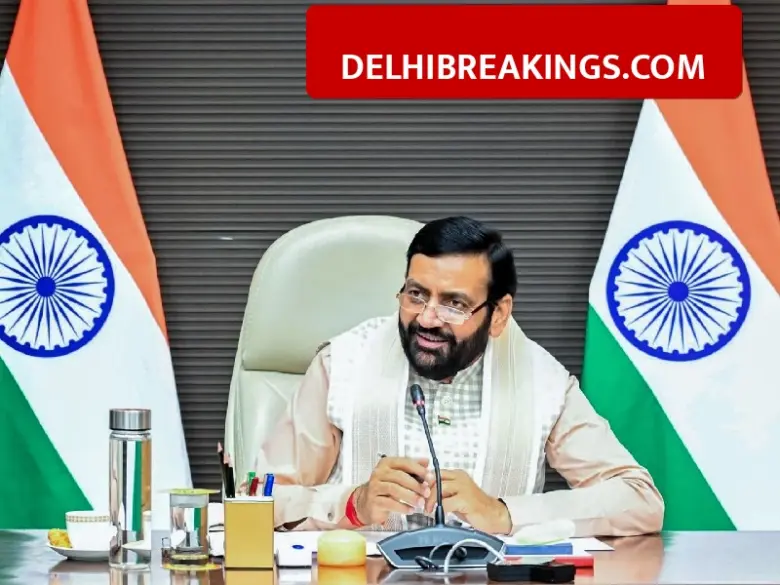
Haryana Chief Minister Nayab Singh Saini has announced a series of major initiatives to boost farmers’ income through crop diversification and horticulture. During a high-level review meeting on April 1, 2026, the Chief Minister directed officials to develop specialized clusters for high-value fruit crops such as strawberry, lemon, guava, and dragon fruit. The state government is also prioritizing natural farming, aiming to scale it across the state following the Gurukul Kurukshetra model.
What are the new subsidies and incentives for Haryana farmers?
The Haryana government has introduced a wide range of financial incentives to encourage farmers to move away from traditional paddy cultivation. Farmers opting for pulses, oilseeds, and cotton will receive an additional bonus of ₹2,000 per acre. Those who choose not to cultivate paddy under the ‘Mera Pani–Meri Virasat Yojana’ will continue to receive an incentive of ₹8,000 per acre. The state is also offering significant support for fruit and vegetable cultivation through direct bank transfers.
| Type of Crop/Initiative | Subsidy/Incentive Amount |
|---|---|
| New Fruit Orchards | ₹24,500 to ₹1,40,000 per acre |
| Integrated Vegetable Cultivation | ₹15,000 (General) / ₹25,500 (SC) per acre |
| Direct Seeded Rice (DSR) | ₹4,500 per acre |
| Sugarcane (Wide-row/Single-bud) | ₹5,000 per acre |
| Indigenous Cotton Cultivation | ₹4,000 per acre |
| Spice Cultivation | ₹15,000 to ₹30,000 per acre |
How is the government supporting natural farming and land reclamation?
Natural farming is being promoted as a mission to ensure chemical-free produce for the public. To maintain farmer confidence, the state will provide financial compensation if productivity declines during the initial transition period to natural methods. Additionally, the government has set a target to reclaim 140,000 acres of waterlogged and saline land in the 2026-27 fiscal year. This project will involve planting eucalyptus trees along field bunds and canal banks to reduce excess water naturally.
Infrastructure and Budgetary Support for 2026-27
A massive budget of ₹1,122 crore has been approved for the 2026-27 fiscal year under the Pradhan Mantri Rashtriya Krishi Vikas Yojana. The Chief Minister has also ordered the installation of 35,000 new solar pumps under the PM Kusum scheme to provide better irrigation facilities. Key highlights of the recent directives include:
- Cluster-Based Farming: Identifying specific areas for fruit crops based on soil and climate.
- Modern Tech: Promoting tissue culture for sugarcane, pulses, and oilseeds.
- Residue Management: Allocation of ₹250 crore for managing crop residue effectively.
- Organic Testing: Establishing state-of-the-art laboratories for rigorous pesticide testing.
- Payment Security: Ensuring payments for 24 crops procured at MSP within 48 hours via e-Kharid.
