

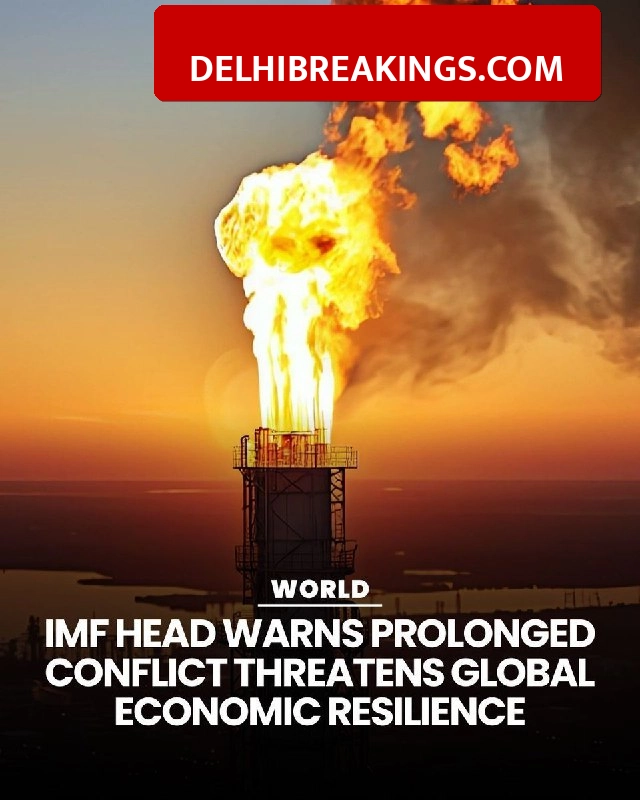
IMF Managing Director Kristalina Georgieva has issued a strong warning about the global economic impact of the ongoing conflict in the Middle East. Speaking at a symposium hosted by Japan’s Ministry of Finance on March 9, 2026, she highlighted that prolonged war will lead to higher energy prices and rising inflation. The disruption is severely testing global economic resilience and creating immense pressure on central banks and policymakers to respond effectively.
ℹ: Rupee hits historic low of 92.52 against US Dollar as crude oil prices cross $110।
How Conflict is Impacting Oil and Shipping
The crisis has directly affected major trade routes, with shipping traffic through the Strait of Hormuz falling by 90 percent. This massive drop poses a direct threat to energy security for net importers in Asia and Europe. International oil prices have surged, with Brent crude trading above $93 per barrel and WTI crossing $92 per barrel. Natural gas prices in Europe have also seen a sharp 38 percent increase early this month. Since December 2025, international oil prices are up nearly 50 percent, creating severe supply chain issues.
Economic Impact and IMF Forecasts
The International Monetary Fund shared specific metrics to measure the damage from the current energy crisis. Georgieva noted that uncertainty is the new normal and urged policymakers to prepare for continuous sudden shocks. The ongoing situation affects both growth rates and general pricing globally.
- Inflation Rule: A 10 percent rise in oil prices over one year increases global headline inflation by 0.4 percent.
- Growth Impact: The same 10 percent increase causes a 0.1 to 0.2 percent fall in global GDP.
- Current Forecasts: Global growth is expected to stay at 3.3 percent in 2026 and 3.2 percent in 2027.
Pacific Island economies are noted as being at extreme risk due to being at the end of the supply chain, facing both shortages and localized inflation.
Global Response and Central Bank Actions
Central banks worldwide face the challenge of maintaining independent monetary policies to keep inflation under control. The IMF advised central banks to remain strictly data-driven. The global financial body currently maintains lending programs with 50 countries and is in talks to provide balance of payments assistance to nations running out of financial buffers. Some countries are already taking emergency measures, such as Pakistan, which has shifted to fixing domestic oil prices every week to match international market volatility.
