

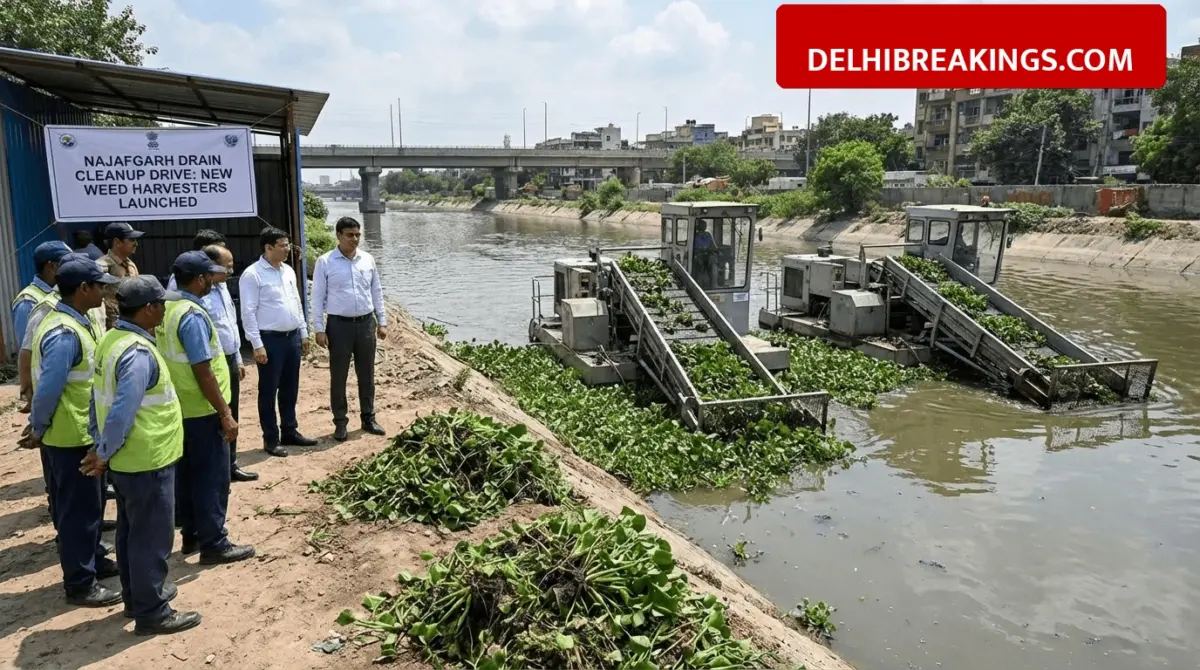
The Delhi government has taken a major step to clean the Najafgarh Drain by launching two advanced weed harvester machines at the Punjabi Bagh bridge. MP Kamaljeet Sehrawat and other senior officials attended the event to mark the start of this project. These machines are designed to remove floating trash and water hyacinths that often block the water flow and cause flooding during the rainy season. This initiative is expected to help millions of people living in West Delhi by reducing the risk of diseases and getting rid of the constant bad smell from the drain.
Technical Details and Cost of the New Machines
The new machines are not just simple harvesters but dual-purpose weed harvester-cum-trash skimmers. They have been deployed by the Public Works Department (PWD) and the Irrigation & Flood Control (I&FC) department. These units are built to handle the heavy load of waste found in Delhi’s largest drain. On 3 April 2026, the department began the deployment process to ensure the machines were operational for the official launch.
- Total Investment: The government spent approximately 2.90 crore on these two machines.
- Engine Power: Each machine is equipped with a 112 HP engine to ensure efficient cleaning.
- Storage Capacity: They can store about 14 cubic meters of collected waste before needing to unload.
- Strategic Deployment: Machines are being placed at key spots like Kakrola, Dwarka, and Uttam Nagar to maximize coverage.
Long-Term Plans for Najafgarh Drain Restoration
The Najafgarh Drain carries nearly 75% of the city’s drainage silt and currently holds over 10 million metric tons of waste. To address this, the government previously launched four amphibious excavators in March 2026 for deep desilting. These machines cost between 1.27 crore and 3.15 crore each depending on their size. The goal is to keep the desilting work going throughout the year rather than just before the monsoon season.
The Delhi Jal Board has also prepared a two-year roadmap to connect homes to the sewer network and stop dairy waste from entering the drain. By 2027, the government plans to build a 30 MW solar power corridor over the drain at a cost of 11 crore. These combined efforts aim to significantly lower pollution levels before the water reaches the Yamuna river.
