

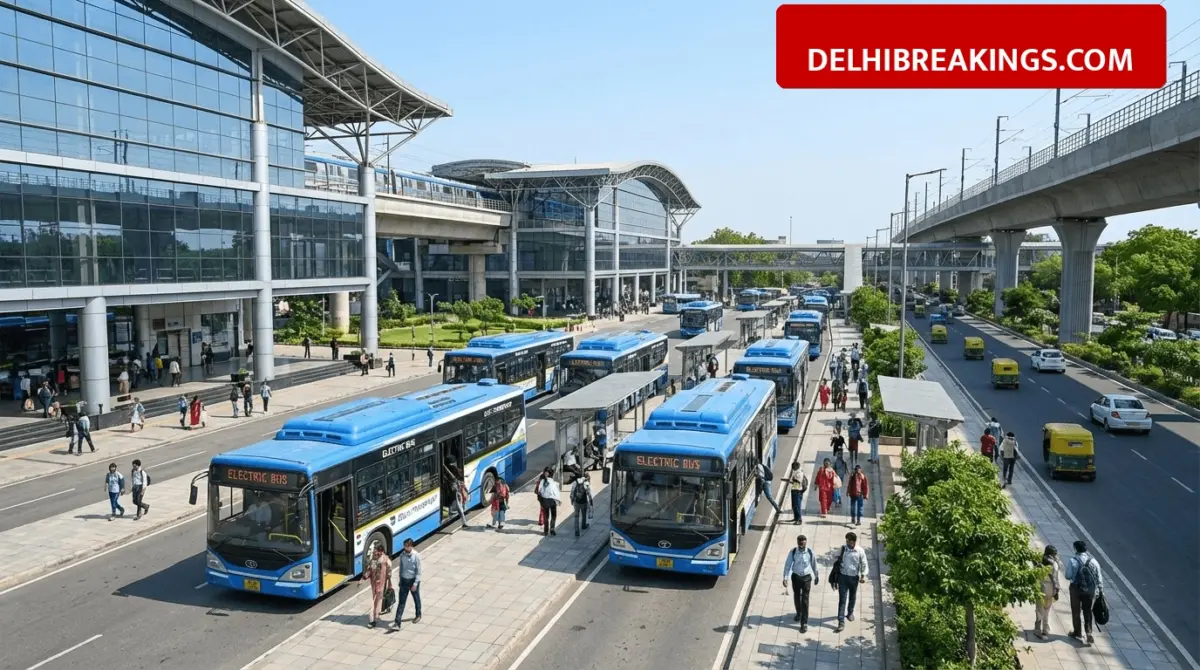
Sarai Kale Khan is undergoing a massive transformation into a world-class Multi-modal Transport Hub. This development integrates the Regional Rapid Transit System (RRTS), Delhi Metro, and the Inter-State Bus Terminal (ISBT) to provide seamless travel. While the RRTS station became fully operational in February 2026, commuters should prepare for significant construction and traffic diversions starting in July 2026 due to the upcoming ISBT redevelopment. Alongside this, the Delhi government is pushing for greener mobility by massively expanding the city’s electric bus fleet.
What facilities are available at the Sarai Kale Khan Multi-modal Hub?
The Sarai Kale Khan RRTS station is now a central point for commuters, connecting different modes of transport within a single complex. A 280-meter foot overbridge equipped with six travelators links the hub directly to the Hazrat Nizamuddin Railway Station. This integration makes it easier for passengers to switch between the RRTS, the Delhi Metro Pink Line, and the Ring Road without leaving the station area.
- Connectivity with Delhi Metro Pink Line at Sarai Kale Khan–Nizamuddin station.
- Integrated city bus interchange with space for over 15 buses.
- Convergence point for three RRTS corridors: Meerut, Panipat, and Alwar.
- Parking facility available for approximately 275 cars and 900 two-wheelers.
- Planned termination point for the 813-km Delhi–Varanasi High-Speed Rail corridor.
Key updates on ISBT redevelopment and electric bus fleet
The Sarai Kale Khan ISBT is set for a major overhaul under a transit-oriented development framework with an estimated cost of ₹7,600 crore. This project will follow the Design, Build, Finance, Operate, Transfer (DBFOT) model. Construction is expected to impact local traffic patterns once the redevelopment plans receive the final government nod. In a separate push for public transport, the city is rapidly increasing its electric bus strength to reduce pollution and improve frequency on major routes.
| Project/Fleet Detail | Current Status / Target |
|---|---|
| RRTS Operational Date | February 22, 2026 |
| Current Electric Bus Fleet | 4,338 (as of March 2026) |
| Electric Bus Target (End of 2026) | 7,500 buses |
| Electric Bus Target (2028-29) | 14,000 buses |
| ISBT Redevelopment Cost | Approx ₹7,600 crore |
| RRTS Standard Fare | ₹20 to ₹150 depending on distance |
Chief Minister Rekha Gupta and Transport Minister Pankaj Kumar Singh have confirmed that the goal is to reach 14,000 electric buses by 2029. This update surpasses previous projections and aims to make Delhi the city with the largest electric bus network. Commuters traveling to and from Sarai Kale Khan are advised to stay updated on diversion plans that will likely be implemented starting July 2026 to facilitate the ISBT construction work.
