

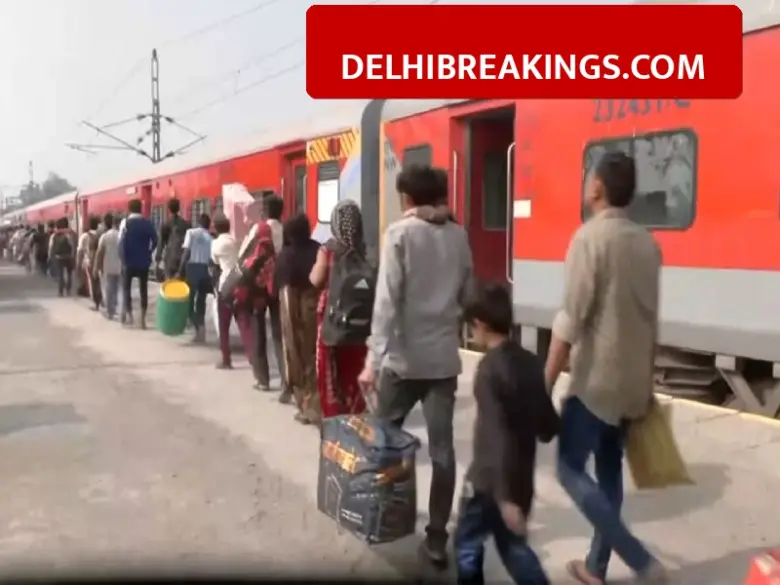
The consequences of the West Asia Conflict have reached the industrial hub of Surat, Gujarat, causing a significant shortage of Liquefied Petroleum Gas. A large number of migrant workers from states like Uttar Pradesh, Bihar, Jharkhand, and Odisha are gathering at Udhna Railway Station to return to their native places. This movement follows a sharp increase in cooking gas prices and limited supply, which has made survival difficult for the labor force employed in the textile industry.
Major Impact on Workers and Industry
- Small LPG cylinder refills that used to cost around 500 rupees are now being sold for 2,500 to 4,000 rupees in the black market.
- Migrant workers reported paying 600 to 700 rupees for small bottles that previously cost only 80 rupees per kg to refill.
- Textile mill owners are reporting manpower shortages, leading some units to shut down for one or two days every week.
- Some labor contractors are providing wooden logs as an alternative fuel for cooking to keep the workforce from leaving.
Government Response and Support Systems
The Ministry of Petroleum and Natural Gas directed public sector oil marketing companies to prioritize domestic consumers on March 5, 2026. The government also invoked the Essential Commodities Act to prevent further supply issues and manages the distribution of gas. In Surat, the district administration has sent officials to monitor 75 gas agencies to stop illegal hoarding and black marketing. To help the workers, textile associations in Pandesara have started mega kitchens that serve meals 24 hours a day at a subsidized price of 50 rupees per meal. These kitchens currently serve nearly 5,000 workers daily to prevent a mass exodus from the city.
