

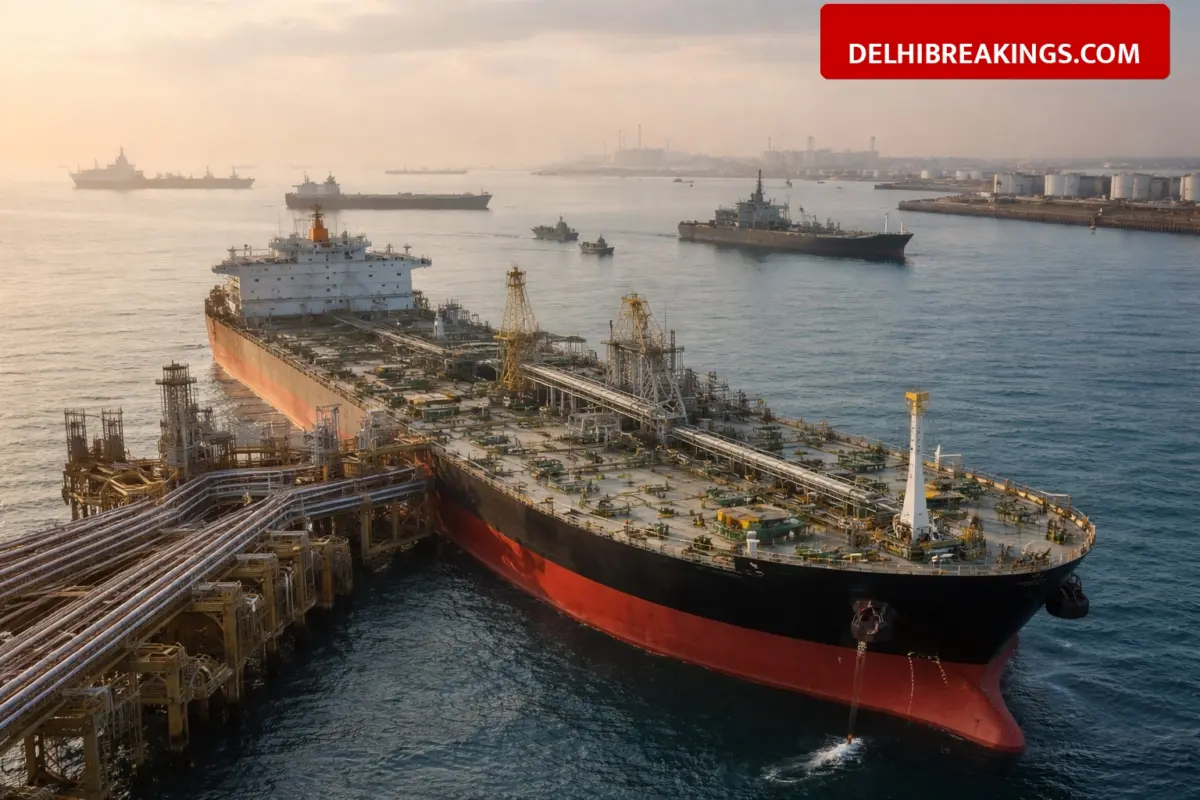
The US Energy Department announced that deliveries from its strategic petroleum reserve will begin next week. This decision involves releasing 172 million barrels over the next four months to prevent fuel shortages and sudden price hikes. This comes as a direct response to the ongoing US-Israel war on Iran and the recent closure of the Strait of Hormuz, which disrupted global energy supply routes.
🚨: LPG Cylinder Update: Govt boosts gas production by 30 percent, confirms no shortage of cylinders।
What is the International Energy Agency Release Plan?
The US contribution is part of a massive 400 million barrel release unanimously agreed upon by 32 member nations of the International Energy Agency (IEA). Fatih Birol, the Executive Director of the IEA, mentioned that this major action aims to alleviate the immediate impacts of market disruptions. This marks the largest coordinated oil release in the history of the agency.
| Country | Oil Contribution (Million Barrels) |
|---|---|
| United States | 172.0 |
| Japan | 80.0 |
| South Korea | 22.46 |
| Germany | 19.7 |
| France | 14.5 |
| United Kingdom | 13.5 |
Per official rules, it takes around 13 days from a presidential decision for the strategic reserve oil to enter the market. The US reserve alone has a maximum drawdown capability of 4.4 million barrels per day.
How Will This Affect Oil Prices and the Economy?
The primary goal of this emergency release is to lower energy prices at the pump for common citizens and stabilize the global market. Following the initial onset of the conflict, crude oil prices spiked toward $120 per barrel. After the announcement of the strategic release, prices settled at approximately $87.25 per barrel.
Energy Secretary Chris Wright stated that the government has arranged to replace the drawn-down oil with 200 million barrels within the next year. This represents a 20 percent surplus refill and will be done at no extra cost to the taxpayer.
Current Situation in the Middle East Conflict
The emergency oil release is a direct result of the regional war that started on February 28, 2026. US Defense Secretary Pete Hegseth noted that over 15,000 targets have been struck in Iran. Recently, US forces hit military targets on Kharg Island, which is Iran’s primary oil export terminal.
Official reports confirm that the oil infrastructure was intentionally left untouched to prevent further market panic. Meanwhile, Iranian officials maintained their blockade of the Strait of Hormuz, where at least three commercial ships were targeted by projectiles recently.
