

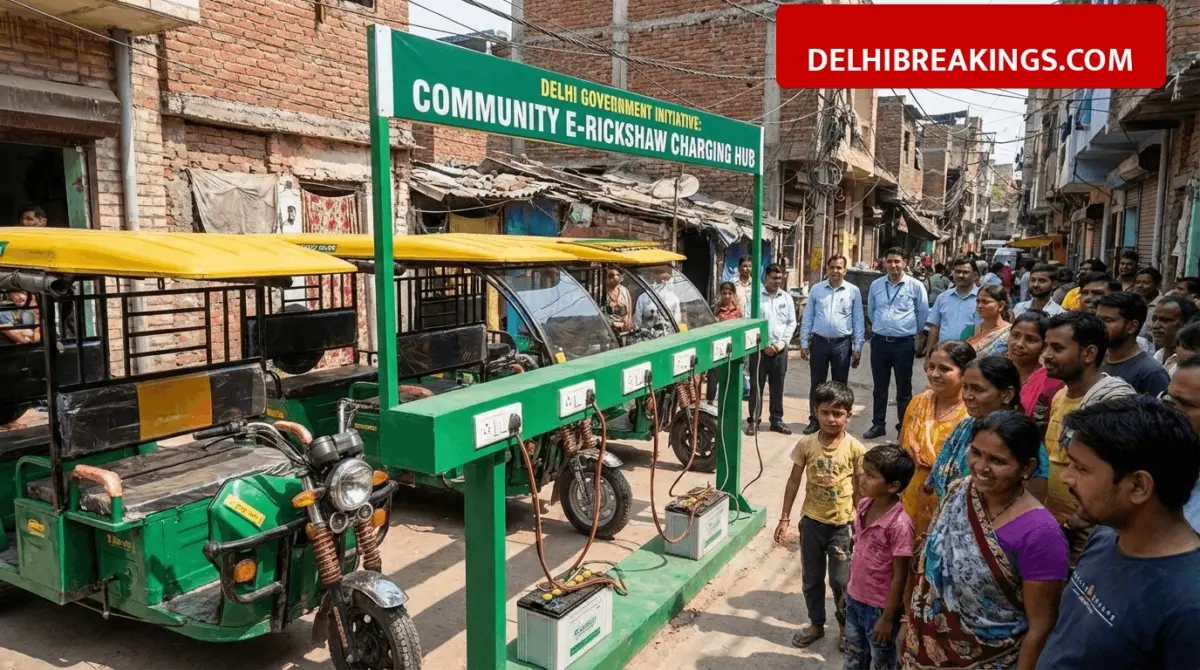
The Delhi government is finalizing a new slum rehabilitation and resettlement policy to improve safety and infrastructure in jhuggi-jhopri clusters. Under this initiative, dedicated e-rickshaw charging hubs will be established within slums to tackle illegal electricity connections and provide a safer charging environment. This policy is expected to be completed by April 2026 and aims to significantly reduce the financial losses incurred by power distribution companies due to theft.
ℹ️: Delhi Govt Green Budget: Rs 6,485 Crore Allocated for Yamuna Cleanup and Water Treatment।
How will the new charging hubs benefit E-Rickshaw owners?
The introduction of regulated charging hubs will offer a safer and cheaper alternative to current illegal methods. Currently, e-rickshaw drivers pay between 100 to 150 rupees daily to unauthorized operators for parking and charging. With the new legal hubs, the cost will follow the rate of 5.50 rupees per unit set by the Delhi Electricity Regulatory Commission, which totals about 50 rupees per charge. This move will help drivers save money while reducing the risk of fires and electrocution caused by hazardous wiring in crowded areas.
New rehabilitation rules and improved facilities
The upcoming policy also proposes extending the eligibility cut-off date for slum rehabilitation from January 1, 2015, to January 1, 2025. This change will allow more residents to qualify for permanent housing in the form of 25 square meter flats. In addition to housing, the government plans to upgrade slum amenities by building modern facilities such as schools, shopping complexes, and dedicated sanitation centers for women. The following data highlights the financial and logistical aspects of the project:
| Category | Details |
|---|---|
| Power Theft Loss | 1.5 billion rupees annually for DISCOMs |
| Legal Charging Cost | Approx. 50 rupees per charge |
| Illegal Charging Cost | 100 to 150 rupees per day |
| Housing Unit Cost | 1.12 lakh to 1.41 lakh rupees |
| Maintenance Fee | 30,000 rupees for five years |
| New Cut-off Date | January 1, 2025 (Proposed) |
Official departments including the Delhi Urban Shelter Improvement Board and Delhi Transco Limited are working together to implement these changes. By creating a single-window facility for charging points, the government aims to encourage the use of electric vehicles while making slum areas more organized and safer for the general public.
